
Article Summary: This in-depth blog explores the keyword “Li-SOCL2 Battery Pack” in a series of impactful questions to enhance SEO relevance and reader engagement. We cover what a Li-SOCL2 battery pack is, its chemistry, advantages and limitations, typical industrial and IoT applications, comparison with other chemistries, custom configuration design, safety and handling, and why VCELL POWER stands out as a trusted supplier.
Li-thionyl chloride battery packs are widely used in smart metering, remote monitoring, security systems, and industrial devices thanks to their unmatched long life, wide operating temperature range, and very low self-discharge. This guide provides tables, lists, FAQs, and actionable insights for engineers, procurement specialists, and tech buyers looking for high-reliability power solutions.
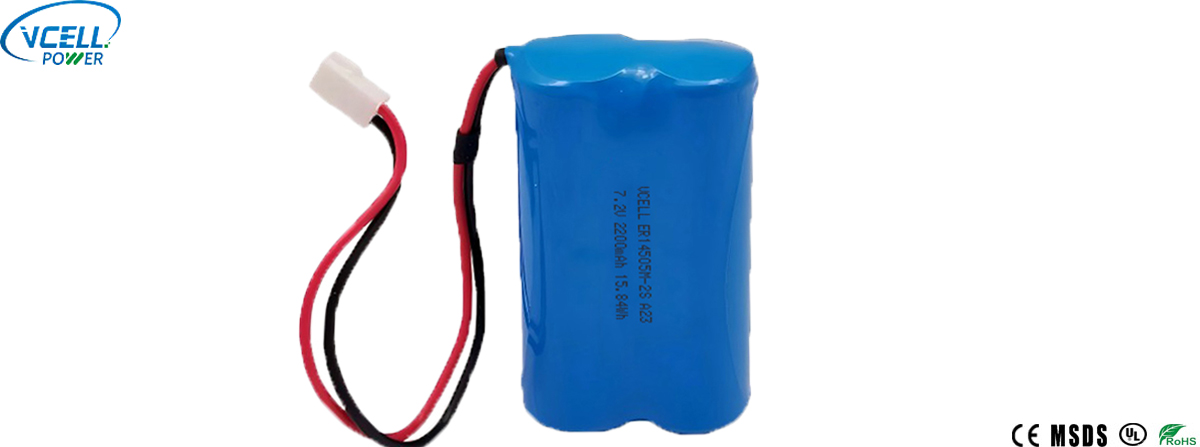
1. What Is a Li-SOCL2 Battery Pack?
A Li-SOCL2 battery pack is an assembly of lithium thionyl chloride cells configured to meet specific voltage and capacity requirements for industrial applications. The cells are connected in series or parallel (or both) to increase voltage and/or capacity, delivering stable long-term power in devices that may operate unattended for years.
Li-SOCL2 stands for Lithium-Thionyl Chloride, a primary (non-rechargeable) battery chemistry known for its extremely low self-discharge and high specific energy density.
2. How Does the Li-SOCL2 Chemistry Work?
The electrochemical system in Li-SOCL2 batteries uses lithium metal as anode and thionyl chloride (SOCl2) as cathode and electrolyte. The reaction between the lithium and thionyl chloride produces a high nominal voltage (~3.6 V per cell) and significant energy density—often multiple times that of alkaline alternatives.
Since the electrolyte is non-flammable and the cells are hermetically sealed, Li-SOCL2 packs are robust and reliable for long life applications.
3. What Are the Core Advantages?
Li-SOCL2 battery packs stand out for several performance characteristics:
- Ultra-Low Self-Discharge: Less than 1% per year, maximizing shelf life.
- High Energy Density: Up to ~650-1280 Wh/L.
- Stable Output Voltage: ~3.6V nominal, with minimal voltage fluctuation.
- Wide Operating Temperature Range: Typically −55°C to +85°C (or higher in specialty designs).
- Long Operational Life: Often 10+ years in continuous use.
4. Where Are Li-SOCL2 Packs Used?
Because of their long life and robustness, Li-SOCL2 battery packs are widely adopted across industries:
- Smart Gas, Water, and Electricity Metering
- Remote IoT and Sensor Networks
- Security & Alarm Systems
- Oil & Gas Field Equipment
- Environmental Monitoring Stations
- Medical Instruments & Backup Systems
These devices depend on reliable power delivery in environments where frequent maintenance is impractical.
5. Typical Specifications
| Attribute | Typical Value | Notes |
|---|---|---|
| Nominal Voltage | 3.6 V | Per cell |
| Energy Density | Up to ~1280 Wh/L | High volumetric energy |
| Operating Temp | −55°C to +85°C | Wide range |
| Self-Discharge | <1%/year | Excellent shelf life |
| Shelf Life | 10+ years | Reliable for decades |
| Rechargeable? | No | Primary cell chemistry |
These values reflect typical performance documented across multiple manufacturers and industry guides. :contentReference[oaicite:9]{index=9}
6. Custom Design & Pack Configuration
Li-SOCL2 battery packs are often customized for:
- Specific voltage requirements (series configurations).
- Higher capacity demands (parallel configurations).
- Special terminals or housing for integration.
VCELL POWER provides tailored Li-SOCL2 battery pack solutions with a variety of voltages, capacities, and shapes to meet long-term, stable power requirements in demanding applications.
7. How Do They Compare With Other Technologies?
Compared to lithium-ion or alkaline cells:
- Li-SOCL2 vs. Lithium-ion: Li-SOCL2 offers longer storage life and simpler design (no recharge cycles) but lower current handling.
- Li-SOCL2 vs. Alkaline: Much higher energy density and better performance in extreme temps.
This is why Li-SOCL2 packs are preferred in remote or industrial devices where maintenance access is limited.
8. Safety, Storage & Transportation
Li-SOCL2 batteries are non-rechargeable and must never be charged. Modern packs feature hermetic sealing and safety venting to minimize risk. When handling:
- Avoid mechanical damage to prevent electrolyte exposure.
- Store in a cool, dry environment within rated temperature range.
- Transport in compliance with UN38.3 and relevant standards.
Certifications such as UL, CE, RoHS, and IEC further validate pack reliability and safety.
9. Frequently Asked Questions
Q1: Can Li-SOCL2 packs be recharged?
No. Li-SOCL2 chemistry is primary (non-rechargeable), and attempting to recharge can be dangerous.
Q2: What is the expected service life?
Li-SOCL2 packs commonly last 10 years or more in service due to ultra-low self-discharge and stable chemistry.
Q3: Are these safe for outdoor IoT sensors?
Yes. Their wide operating temperature and ability to hold charge for years make them ideal for remote sensors.
Q4: How do I choose the right configuration?
Match pack voltage with device requirements and choose capacity based on desired runtime. Work with an experienced manufacturer for best results.
10. Conclusion & Contact
Li-SOCL2 battery packs represent a class of long-life, high-reliability power solutions ideal for applications from smart metering to remote industrial monitoring. Their unique chemistry delivers ultra-low self-discharge, consistent voltage, and multi-year service life—making them a critical power source where maintenance is costly or even impossible.
If you are looking for customized, high-performance Li-SOCL2 battery pack solutions backed by extensive manufacturing experience, VCELL POWER offers tailored products to meet your exact requirements. Whether for smart meters, IoT devices, or industrial systems, their packs are certified and engineered for robust operation.
For reliable, long-lasting battery solutions that power your critical applications with confidence — contact us today!